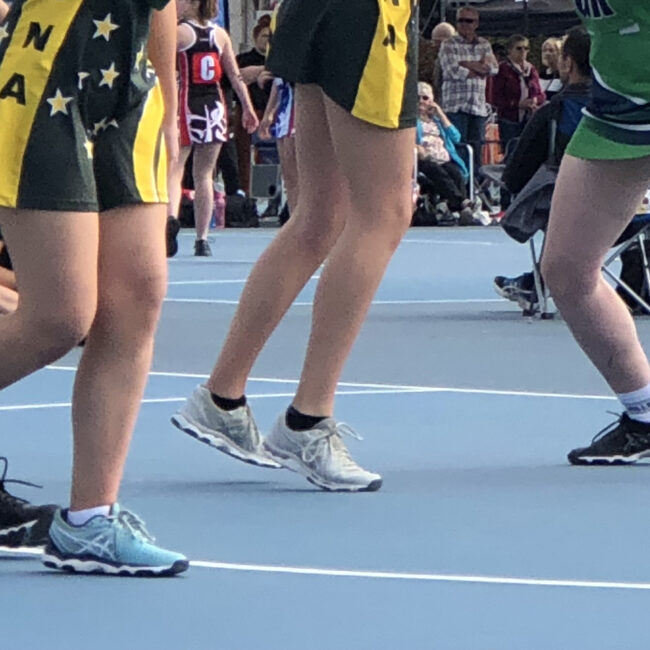
Expert Q&A: Slip testing for netball courts
Materials testing specialist Kate Tonkin answers what you need to know about slip resistance testing for netball courts – from tips on reducing the slipperiness of a co

Our NATA-accredited laboratory is run by skilled technicians who help solve problems and minimise the risk of trips and falls in your project.
Our NATA-accredited laboratory is run by skilled technicians who help solve problems and minimise the risk of trips and falls in your project. Our Adelaide-based slip testing team is certified to test to AS 4586:2013 (New Pedestrian Surfaces) and AS 4663:2013 (Existing Pedestrian Surfaces). We offer same-day slip testing* for Adelaide projects (we test Australia-wide).
The experienced technicians at Stone Initiatives can help to ensure your surfaces meet the relevant Australian Standards, and determine compliance with relevant requirements of the National Construction Code. We’ve also developed a suite of in-house testing methods to help determine fitness for use.
Our services are fast, efficient and reliable. With more than thirty years of experience in determining slip resistance, we are the only NATA-accredited laboratory in Australia that specialises in dimension stone.
Our Capabilities
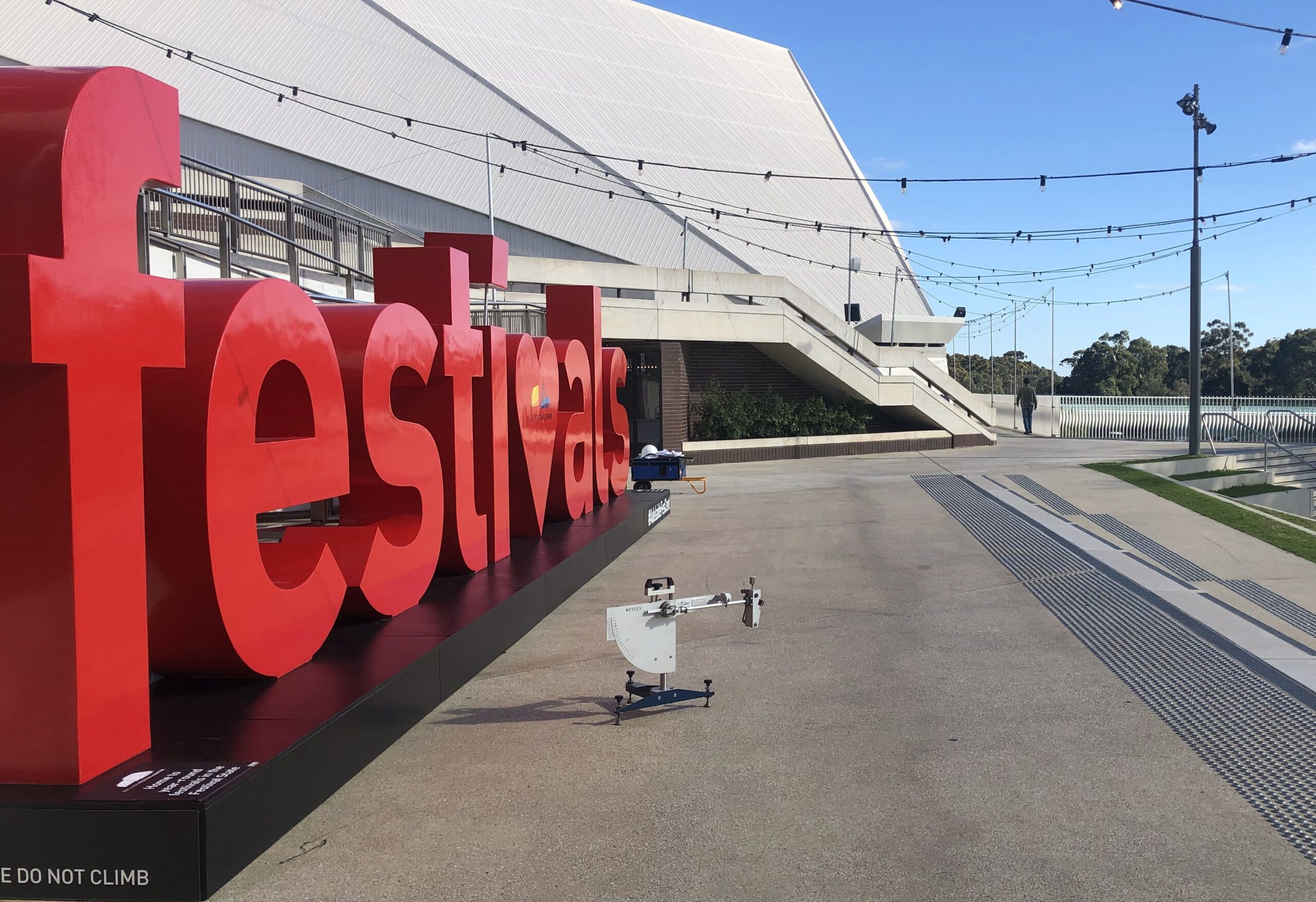
The Wet Pendulum Test simulates a shoe heel contacting a wet surface to assess how likely a surface is to cause slipping when wet — the most common slip hazard, especially outdoors or in areas exposed to water
Dry Floor Friction testing measures the coefficient of friction (CoF) of a surface when it is clean and dry, i.e., no water or contaminants. It helps assess whether a floor is likely to be slippery under dry conditions.
The TP345 test determines the skid resistance value (SRV) of a paved surface. Essentially the friction available between a vehicle’s tyres and the road surface under wet conditions. The measurement helps assess how likely a vehicle is to skid when braking or cornering, especially in wet weather.
SI-AWT-2016 refers to a specific Accelerated Wear Testing (AWT) method developed (and published in 2016) for assessing how the slip resistance of pedestrian surface materials changes after simulated wear. Especially for stone, tiles and other flooring products.
In Australia and New Zealand slip resistance is measured according to two different (but similar) standards, depending on whether the surface is new or existing. New pedestrian surfaces are slip tested in accordance with the current version of AS 4586, while existing pedestrian surface are tested in accordance with AS 4663.
Stone Initiatives is Australia’s only NATA-accredited laboratory specialising in dimension stone. Our experienced technicians can help to ensure your project or flooring sample meets Australian Standards related to slip resistance, and we can also test to determine compliance with the slip resistance requirements of the National Construction Code.
“Complying with slip resistance requirements can be difficult – what works for one location and surface type might not work for another. On top of that, our clients often have the challenge of meeting the project’s aesthetic requirements. In addition to slip testing, we are often called on to utilise our experience and recommend alternative finishes that might achieve the desired aesthetics.” – Kate Tonkin
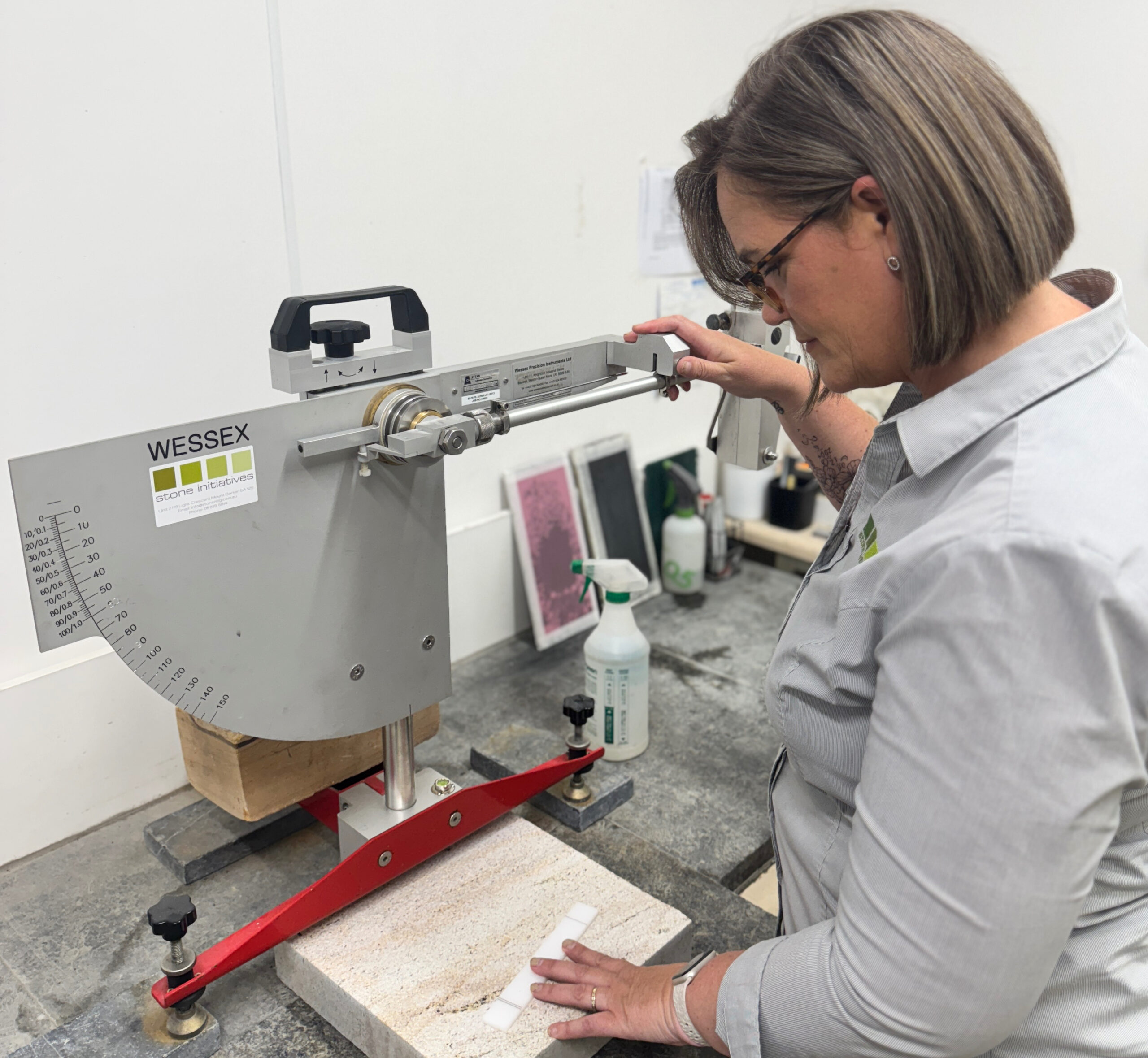
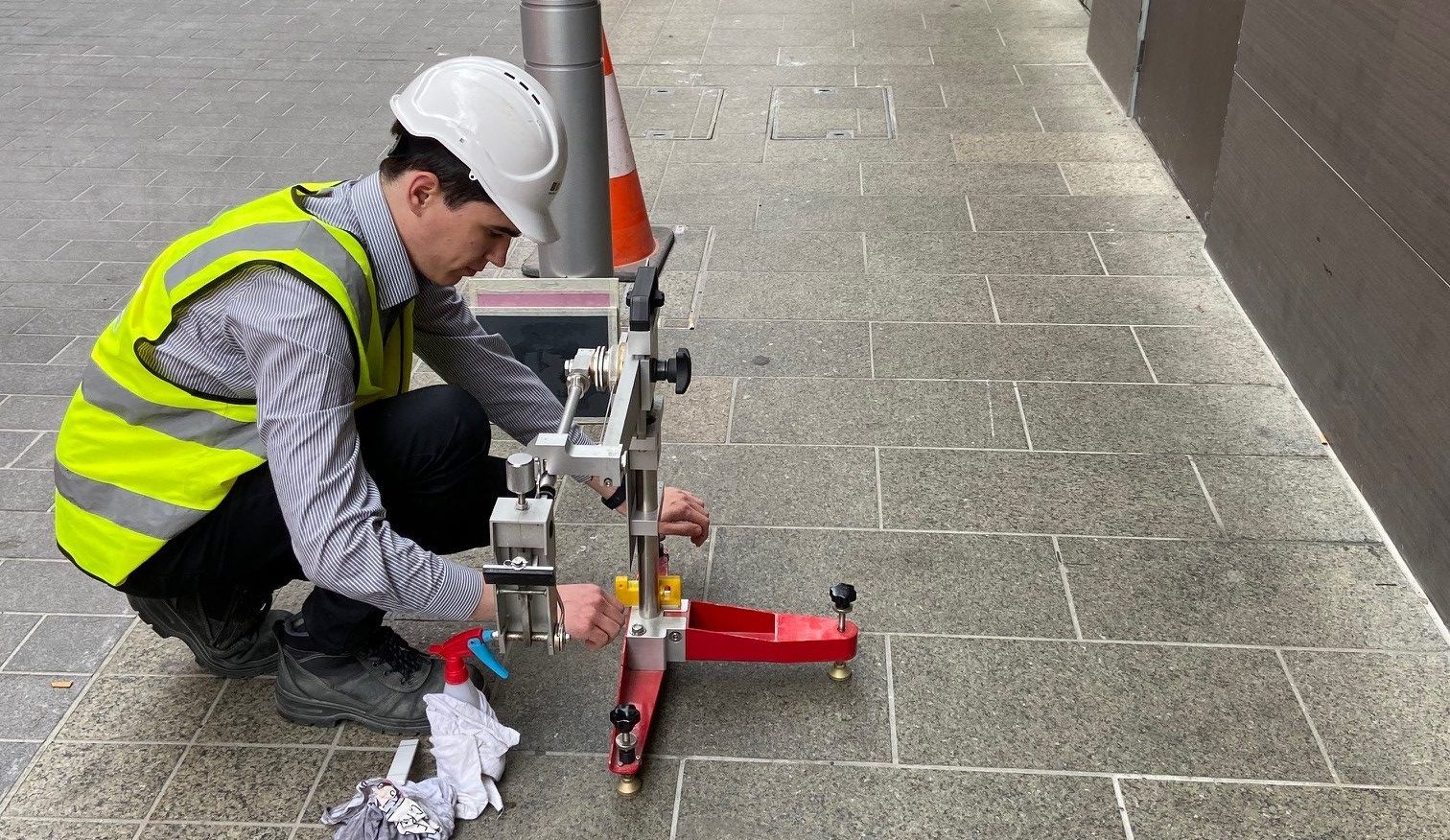
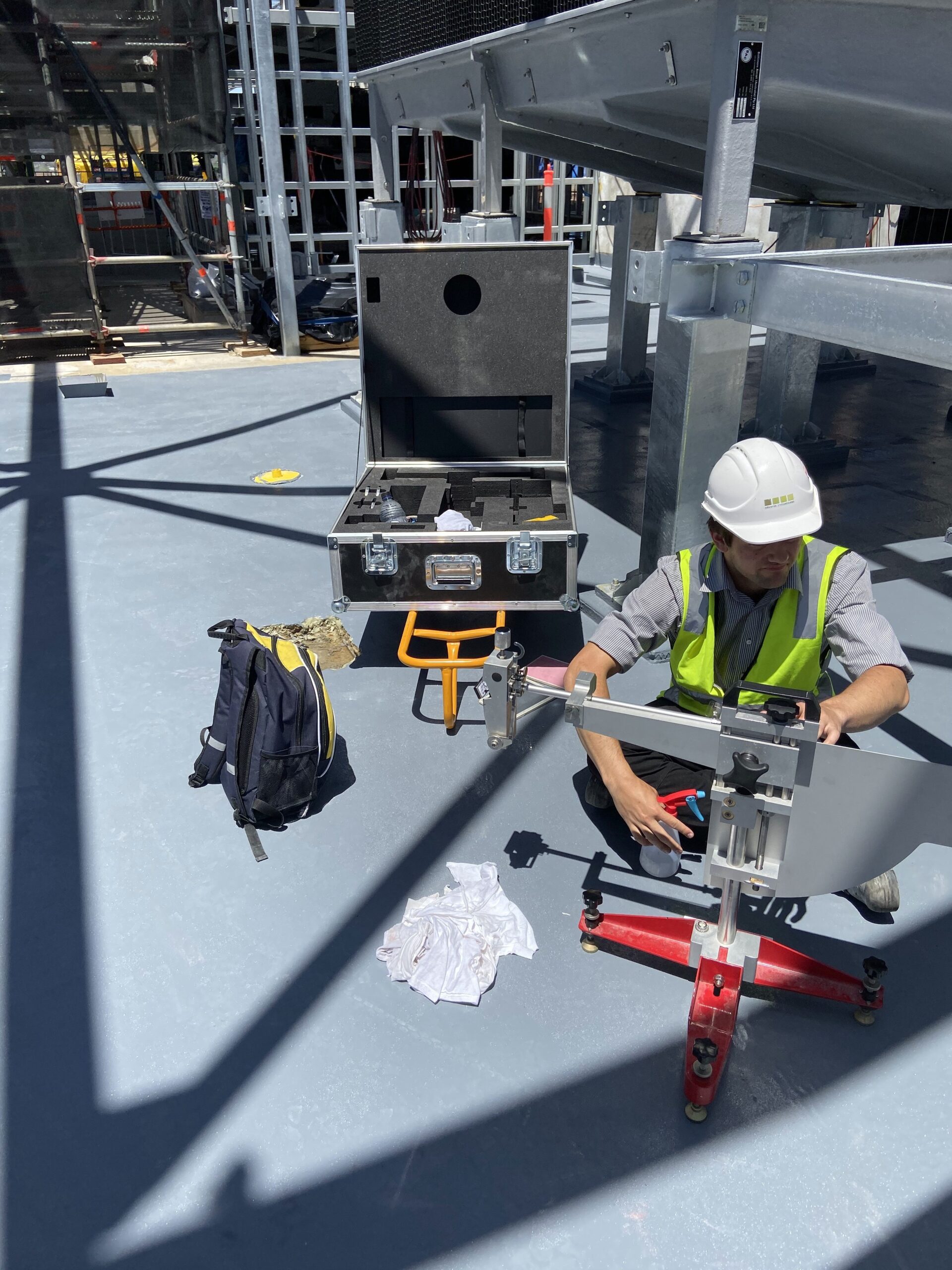
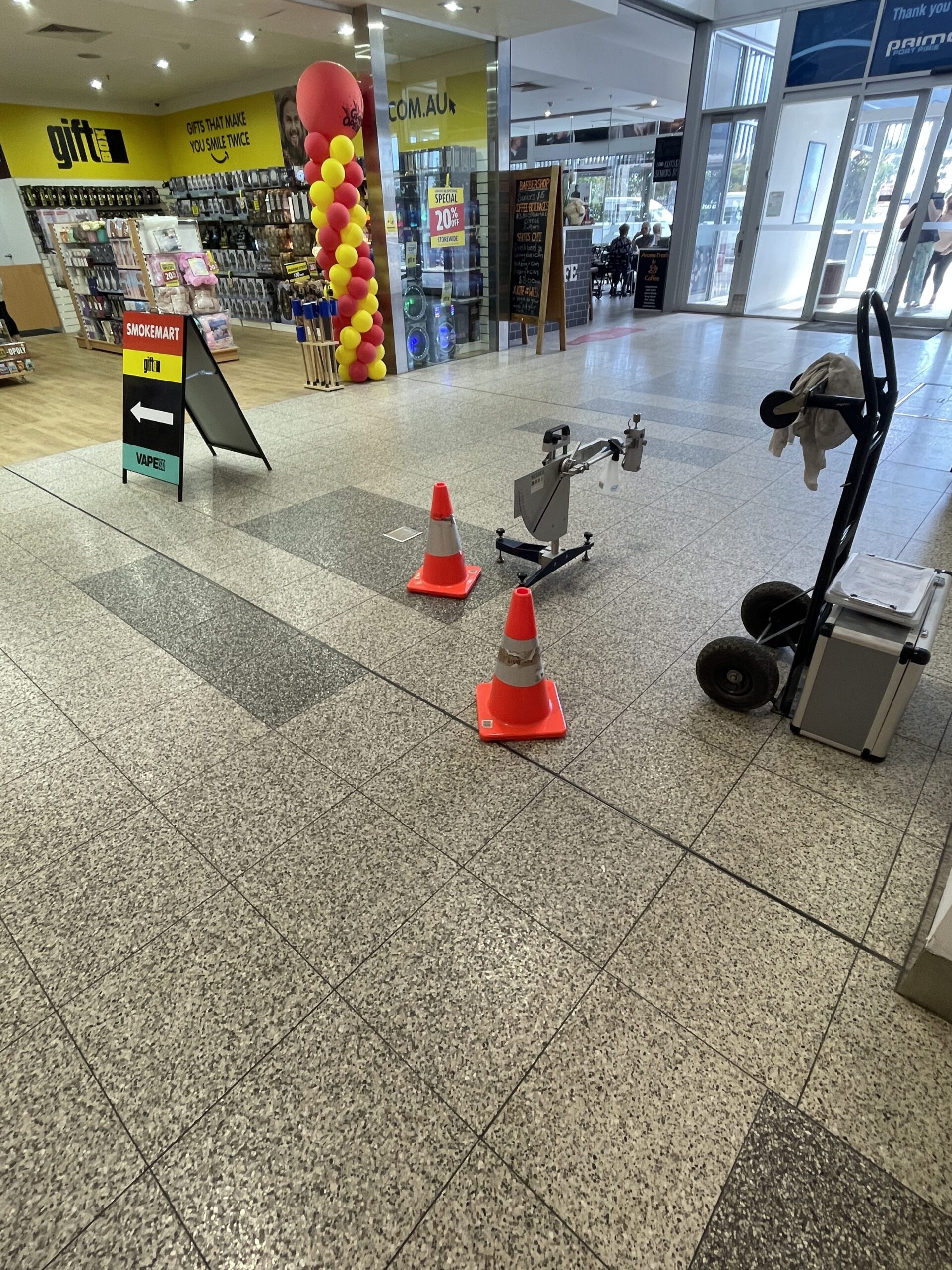
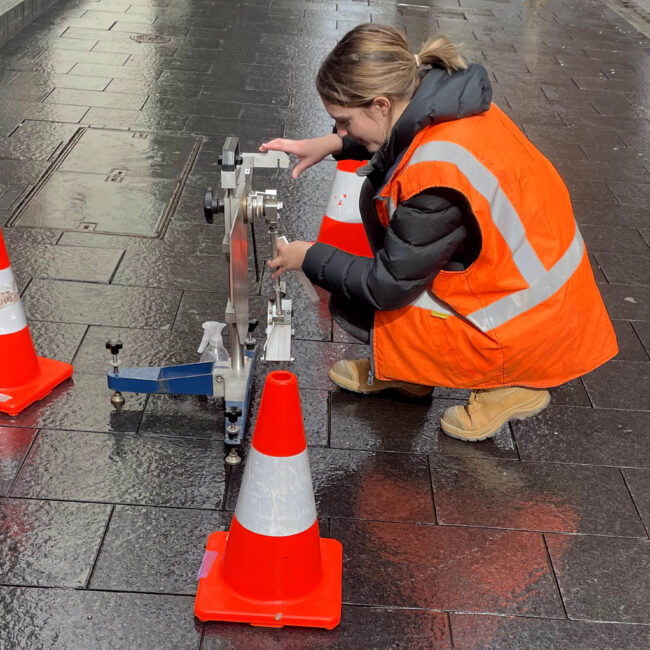
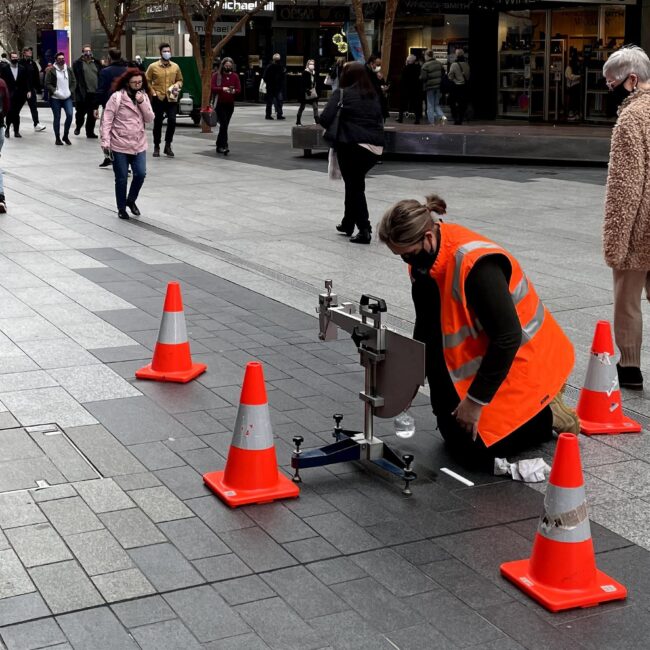
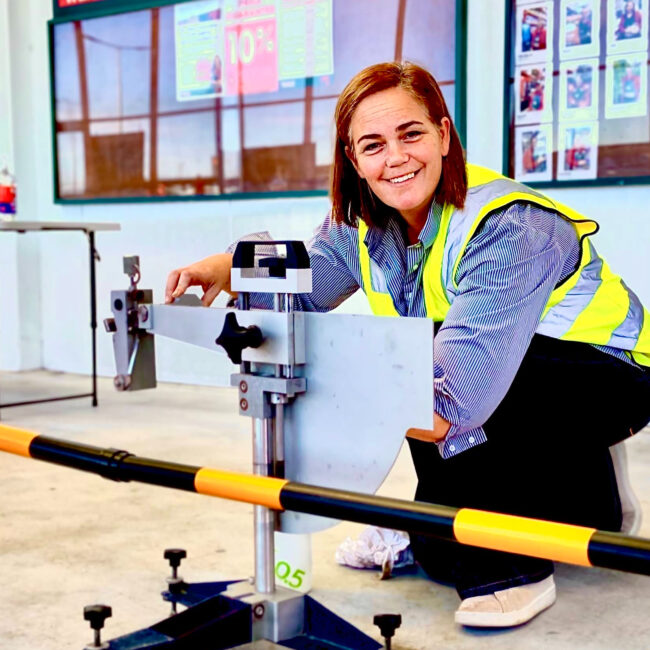
The Pendulum method measures the frictional resistance between a rubber slider mounted on the end of a pendulum arm and the test surface. The pendulum consists of an arm that rotates about a spindle attached to a vertical support pillar. At the other end of the arm is a mass (shaped like a foot) fitted with a spring-loaded rubber slider. The pendulum is locked into a horizontal position and then released so that it strikes the sample surface over a set distance with a constant velocity and energy. The pendulum continues its arc past the strike path and the height of the forward swing is determined by the energy lost due to friction when in contact with the sample surface. A pointer is pushed along by the pendulum and records the height of the swing. A reading is recorded from the scale and recorded as the British Pendulum Number (BPN). The mean BPN is calculated to give the slip resistance value (SRV).
| Classification | BPN Range | Location Type | Examples |
|---|---|---|---|
| P5 | > 54 | Ramps in wet locations |
|
| P4 | 45 – 54 | External wet areas |
|
| P3 | 35 – 44 | Internal wet areas |
|
| P2 | 25 – 34 | Transitional areas |
|
| P1 | 12 – 24 | Internal dry areas |
|
* Slip resistance recommendations as detailed in Standards Australia handbook HB198:2014
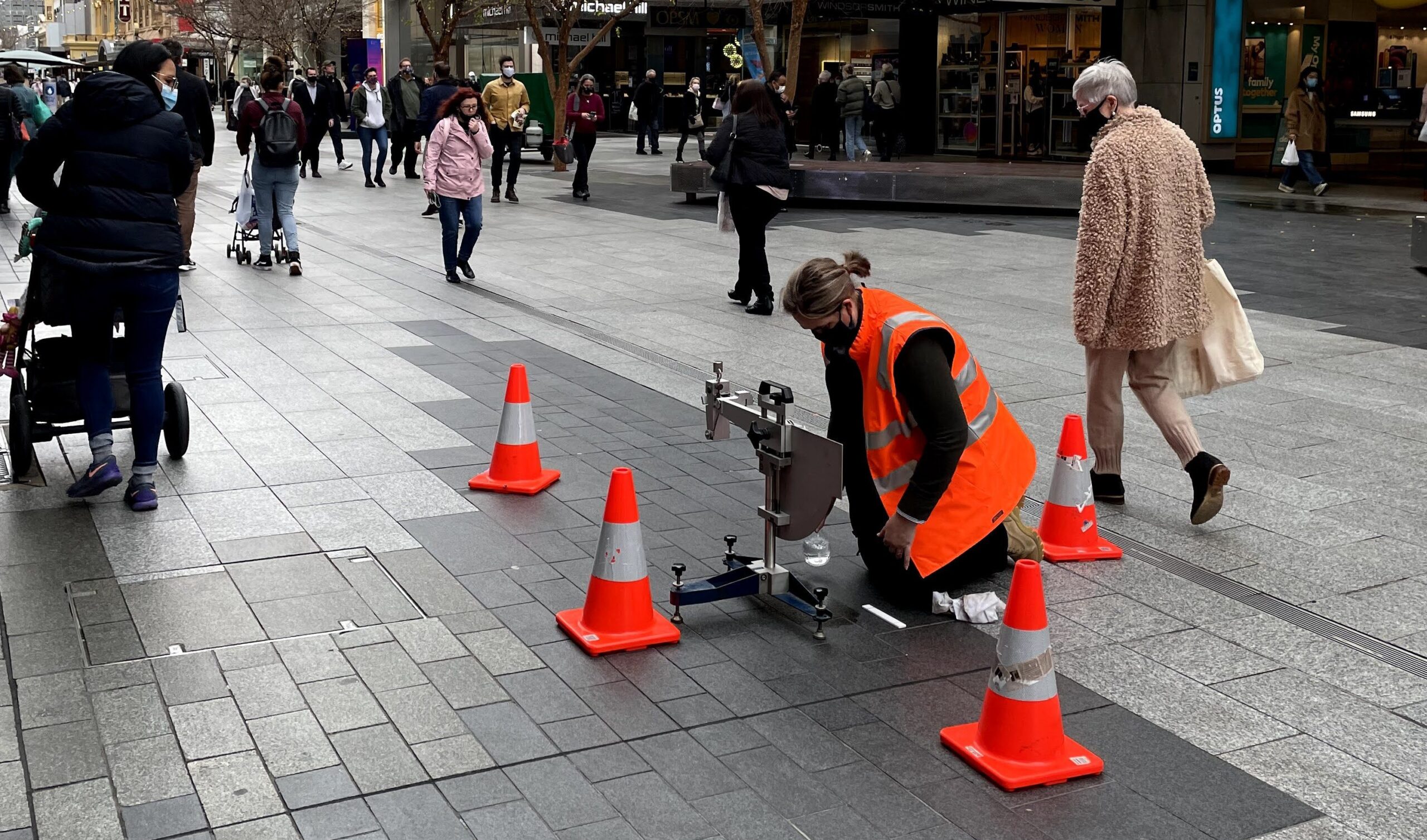
Our Adelaide-based team can test for the slip resistance of your existing project on site in Adelaide or anywhere in Australia, or you can send surface samples to be slip tested in our NATA-accredited lab here in Adelaide. Our staff have more than 30 years of experience in determining slip resistance for tiles, flooring systems and other pedestrian surfaces. We are skilled and experienced trouble-shooters backed by a laboratory that can provide additional services related to pedestrian surface finishes – this makes solving problems and minimising risk in your project quicker, easier and stress free. See more reasons here.
*Same-day testing is available for Adelaide-based projects, subject to availability, Call-out fees may apply.
LEARN MORE
We usually require a minimum 5 pieces or tiles that are no smaller than 100mm x 150mm in area size for the wet pendulum test method. If you have a limited amount of sample and they are larger format, it is still possible to complete a test on your sample. In this case, please contact us for further information about sample requirements.
For a dry area such as an office lobby or shopping mall, we can complete both wet pendulum testing and dry slip resistance testing, to ensure that the surface meets the relevant requirements in both dry and wet scenarios (such as a spilled drink on a floor that would usually be dry). For a wet area such as a public bathroom, we would generally only need to carry out wet pendulum testing. See our slip resistance testing page for more information or get in touch to discuss your project.
Slip resistance and skid resistance are tested in similar ways, but skid resistance testing is more relevant to roadways where there is the use of a softer rubber, like a sneaker or a car tyre.
Accelerated wear testing involves testing a surface to see how it will perform after a certain number of cycles (or scrubs) of wear. There is no set number of cycles that equates to a certain amount of real-life traffic, but a common gauge for a high traffic area is 500 cycles. If a surface still meets its slip resistance requirements after the 500 cycles carried out in an accelerated wear test, this indicates that the slip resistance of the surface has longevity.
Determining slip resistance after accelerated wear is becoming a critical part of testing programs, especially with so many new developments using stone flooring. Stone Initiatives performs standard accelerated wear testing to method SI-AWT:2016 that incorporates AS4586:2013 and is recognised by NATA.
An R-rating is a classification achieved from an oil ramp test, which we don’t undertake at Stone Initiatives. Our slip resistance testing includes wet pendulum testing (which gives a P-rating) and dry slip resistance testing (which gives a D classification). The Standards Australia handbook (HB198:14) states a requirement for pendulum or ramp testing and these can be considered interchangeable. It’s also worth noting that ramp testing can’t be performed on site, making pendulum testing a more versatile test. An R-rating isn’t always required – chat with us about your slip resistance testing requirements.
Our reports outline the slip resistance rating, and if it’s a new surface we give it a classification. We also provide useful comments on what the results mean – for example, what the ratings and classifications mean in terms of suitability for use on a proposed project. Our reports are more than just a list of numbers!
If you have additional questions about slip resistance testing after reading these FAQs, or if you’d like to organise a quote for your project, visit our contact page to get in touch.
Blog
Materials testing specialist Kate Tonkin answers what you need to know about slip resistance testing for netball courts – from tips on reducing the slipperiness of a co
From a rubber slider on a pendulum arm to, a pair of bare feet on a platform, there are various standardised methods of slip testing in Australia. Each is designed to measure the s
This quick guide looks at when and how often slip testing should be conducted, and why regular professional testing of public flooring surfaces is so important. How often a floorin
This quick guide explains the basics of slip resistance standards in Australia: What they are, how they are different for new and existing flooring surfaces, and which test methods
Are you wondering what achieving a ‘good’ slip rating means for your project? This quick guide explains the basics of slip resistance Standards in Australia, what constitutes a
Are slip resistance requirements distinct for different industries and workplace types? And are slip testing methods the same for all types of flooring surfaces? This article explo
What is a good slip rating? Is there more to slip resistance than identifying slippery surfaces? Here we chat with materials testing specialist Kate Tonkin, head of the finish eval
Pedestrian surfaces can be litigation minefields. Understand the slip resistance of your project and know how to reduce your risk of litigation.