Engineered stone ban: What does it mean for builders and specifiers?
This expert Q&A with scientific officer Thomas Baggs answers your pressing questions about Australia’s engineered stone ban. What does it mean for builders and specifiers?
Q&A updated April 26, 2024
Why is engineered stone being banned in Australia?
There is a link between working with engineered stone and the development of silicosis, a deadly lung disease, in workers. A disproportionate number of silicosis cases identified recently are in workers that process and work with engineered stone products. See more here.
When does the ban come into place?
In the majority of jurisdictions, the ban is planned to commence from 1 July 2024.
What is engineered stone?
Broadly speaking, engineered stone is an artificial product designed to resemble natural stone products. Engineered stone contains crystalline silica and is formed by combining natural stone components (minerals, or crushed rock) with chemical constituents such as resins, pigments, and other binding materials before undergoing a hardening process to produce a final product.
On 22 March 2024, WHS ministers agreed that engineered stone be defined in the model WHS Regulations as an artificial product that:
- contains at least 1% crystalline silica as a weight/weight concentration, and
- is created by combining natural stone materials with other chemical constituents (such as water, resins, or pigments), and
- becomes hardened.
This definition excludes:
- concrete and cement products
- bricks, pavers, and other similar blocks
- ceramic wall and floor tiles
- sintered stone
- porcelain products
- roof tiles
- grout, mortar, and render, and
- plasterboard.
What does the ban mean for the engineered stone already installed in my project?
Guidance from Safe Work authorities is that finished engineered stone products “do not pose a safety risk after installation in your home or workplace, so long as they remain undisturbed.” as installed. There is no ban on already installed ‘legacy’ engineered stone products. If possible, these installed products should remain undisturbed, as installed.
What should I do if I want to remove or alter an engineered stone element that is already installed?
There is a risk that hazardous silica dust could be generated if any repair or removal work is undertaken on already installed engineered stone products. Safe Work Australia is currently developing guidance for how to handle ‘legacy’ engineered stone products that are already installed. This is due to be submitted to government by the end of February 2024.
What can I use in my new built environment project instead of engineered stone?
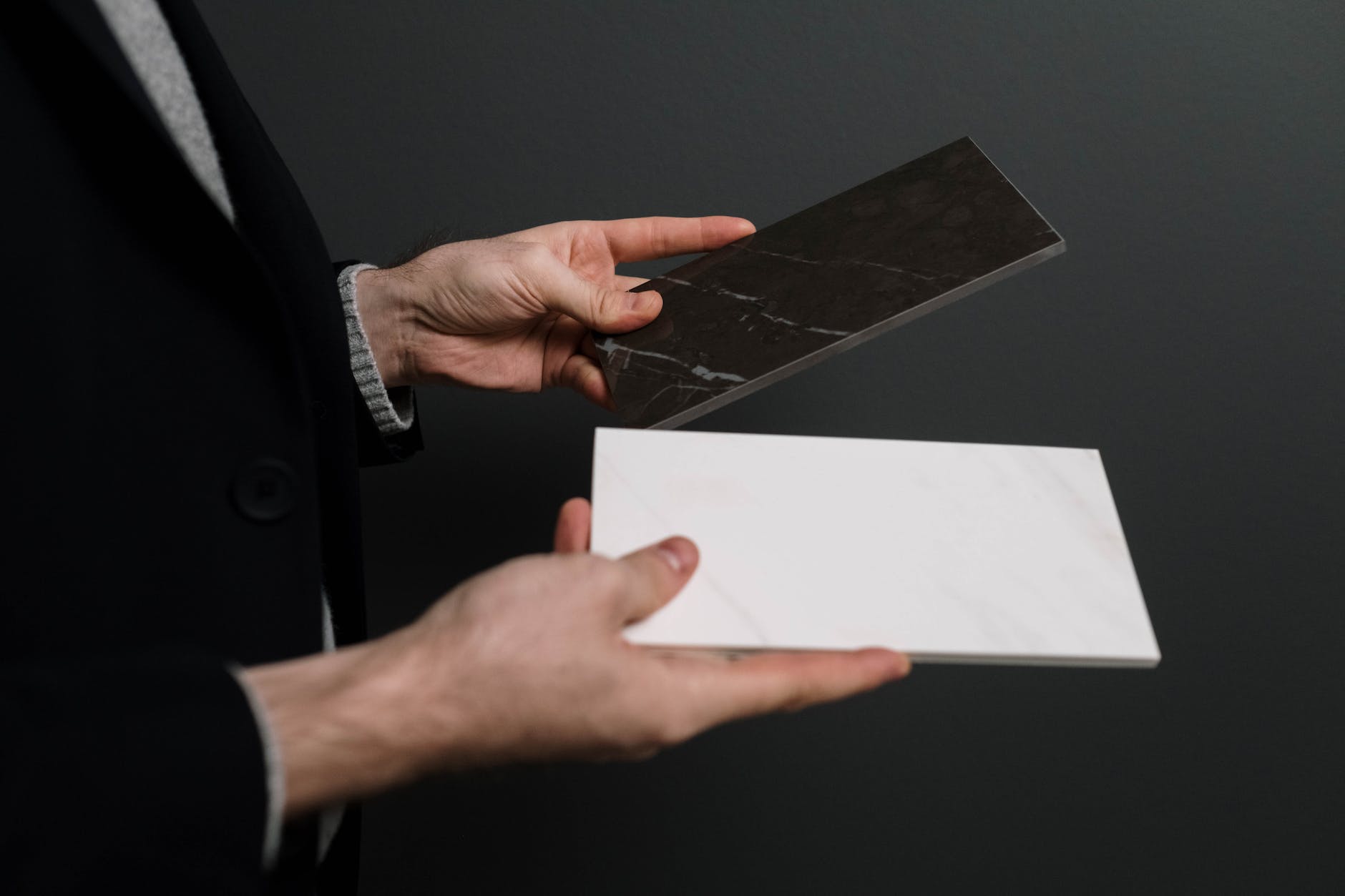
Natural stone is always a good option for tiling or benchtops (two common uses of engineered stone). Many natural marble and limestone products do not contain crystalline silica and are often beautifully and uniquely patterned for a luxury, high-end finish.
If a stronger product is required, natural stone types such as granites, gneiss, bluestone and even some types of marble are often very strong and durable stone types.
Some other alternatives to engineered stone include no-silica vitrified slabs, terrazzo, porcelain and other ceramic tiles.
Does natural stone contain crystalline silica?
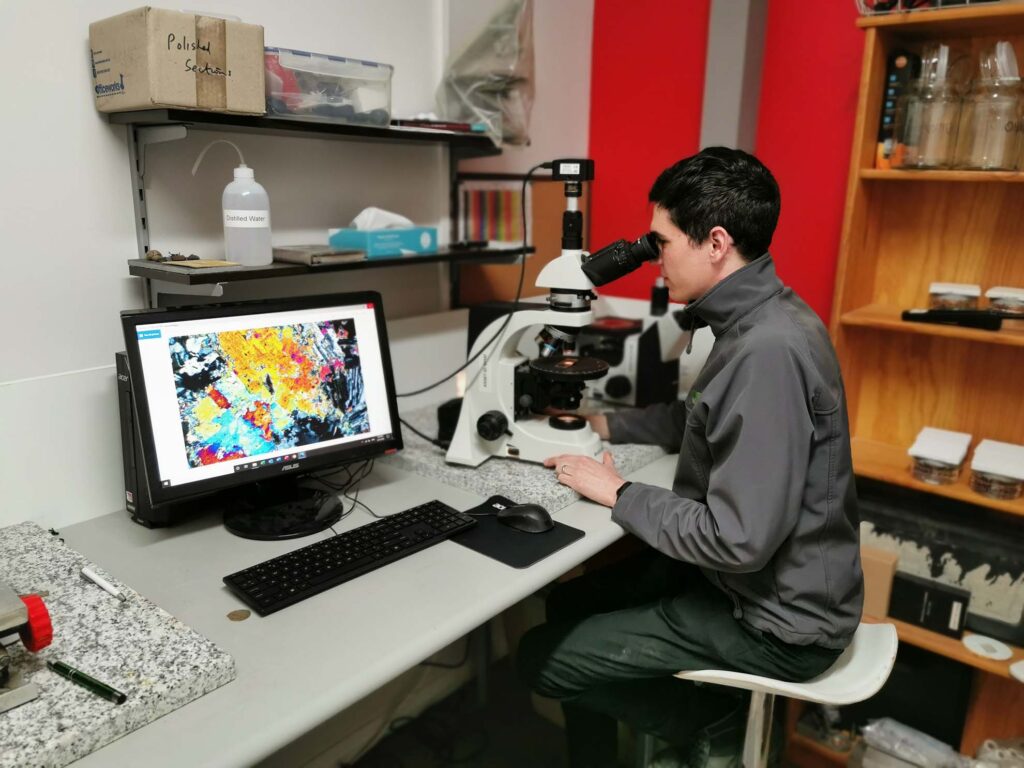
Some natural stone types can contain crystalline silica, such as quartzite, granite, sandstone and other common types. However, according to Safe Work Australia authorities, respirable crystalline silica generated from the processing of natural stone has different physical and chemical properties to the dust produced by processing of engineered stone.
Processing of engineered stone produces nanoscale particles of crystalline silica, which can penetrate deeper into the lungs. It also contains other chemical components (for example, resins), which may contribute to the high-risk nature of the dust produced by engineered stone processing. Historically, engineered stone products have also contained a far higher (sometimes greater than 90%) proportion of crystalline silica, when compared with most natural stone products.
Safe Work Australia identifies typical crystalline silica amount (percentage) of common stone types and similar products:
| Product type | Amount of silica (%) |
| Marble | 2 |
| Limestone | 2 |
| Slate | 25 to 40 |
| Shale | 22 |
| Granite | 20 to 45 (typically 30) |
| Natural sandstone | 70 to 95 |
| Engineered stone | Up to 97 |
| Aggregates, mortar and concrete | various |
You can find out more in our previous article “Measuring crystalline silica in stone,” which you can read here.
What is ‘best practice’ when cutting or grinding natural stone?
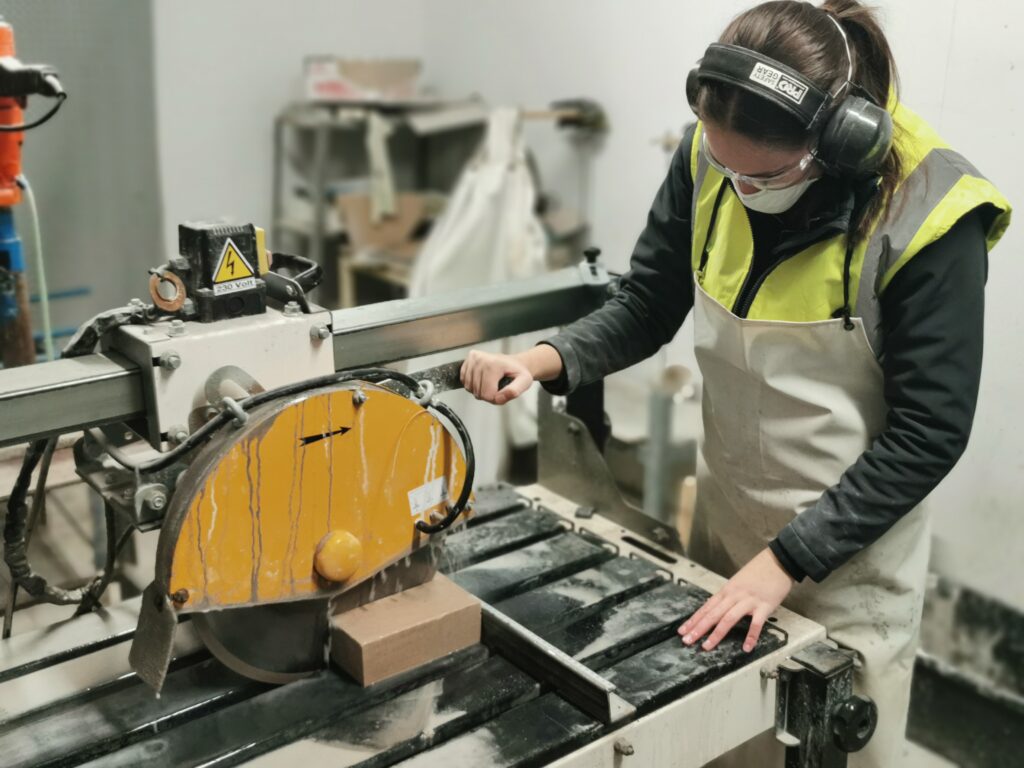
Best practice when working with natural stone products is to undertake processing under controlled conditions to reduce the potential exposure to any respirable crystalline silica dust. The definition of ‘processing’ includes all cutting, grinding, trimming, sanding, abrasive polishing and drilling.
Appropriate controls to reduce the risk of inhalation of crystalline silica when processing natural stone are: water suppression (i.e. wet cutting), exhaust system to extract dust (this should be on-tool dust extraction/collection) and additionally an exhaust system in the room/area being used to process. Respiratory PPE and full-body coveralls should be considered when processing some types of natural stone, especially where other engineering controls are not in place.
It is important to note that the appropriate controls are different for each state and territory. Guidance from each state’s work safe authority should be consulted to ensure compliance. It is the responsibility of the person conducting the business or undertaking (PCBU) to ensure that safety requirements are met satisfactorily.
How can I ensure a natural stone product functionally matches an engineered stone product that was previously specified, but which can no longer be used?
Stone Initiatives specialises in testing all types of products, but particularly natural dimension stone. We can test for strength, durability, and many other physical properties to determine if a natural stone product is functionally suitable for any given requirement. We are always happy to chat about these requirements if you’d like to give us a call.
What testing can I perform to ensure the natural stone product’s fitness for use?
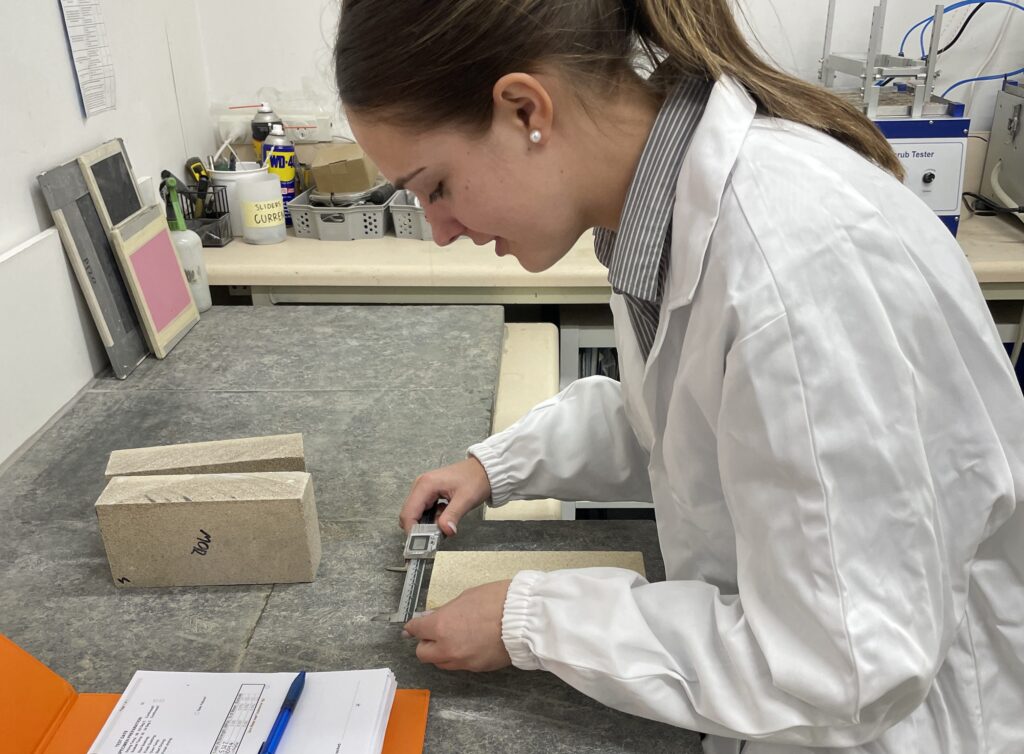
Initially, some or all of the basic physical properties of the stone should be tested; these include water absorption, bulk specific gravity, flexural strength, modulus of rupture strength, compressive strength and abrasion resistance. Additional tests can then be recommended based on the specific application or intended use of the natural stone product.
There is an extensive list of additional test methods we have capability to perform, such as slip resistance, durability, dimensional stability, resistance to acid, stain resistance, accelerated wear testing, and many, many more. Get in touch to discuss the unique requirements for your project.
What else do I need to consider before I use natural stone in my built environment project?
Natural stone is a natural product and as such will be variable in appearance, composition and performance. This is the unique trade-off of natural dimension stone tile products – the variability contributes to its natural beauty and attractiveness, but also means the performance may vary slightly from tile to tile, slab to slab, and block to block of the product extracted from the quarry.
It is important to test for fitness for use initially, and even periodically throughout the supply of the product, for larger projects requiring a large quantity of material. This ensures consistent performance and longevity of the finished product.
Where can I find more information about natural stone in built environment design?
Our website contains an abundance of free resources on natural stone and its use in built environment design. From our Industry Resources tab, you can browse technical articles, expert Q&As, case studies, and FAQs on dimension stone testing; façade and engineered product testing; heritage services and mortar analysis; and slip resistance testing.